A Political Intervention to Forever Taint a Seminal Moment in American Soccer
July 6, 2026
WORDS
Adam Booker
The facts are not in any serious dispute. United States Men’s national team striker Folarin Balogun received a red card during the the side’s Round of 32 win over Bosnia and Herzegovina on July 1, for a play in which he landed on the ankle of an opposing defender. In truth, it is a red card that has been given countless times, whether you feel it is in line with the spirit of the game or not. Under FIFA’s own rules, a straight red card carries an automatic one-match suspension, full stop, no appeal. That has been the standard for more than 60 years. It was a crushing blow to the USMNT’s hopes as Balogun had been a lightning rod in attack so far in the tournament, scoring three goals in four games. Then the view of the potentially historic U.S. run was flipped on it’s head.
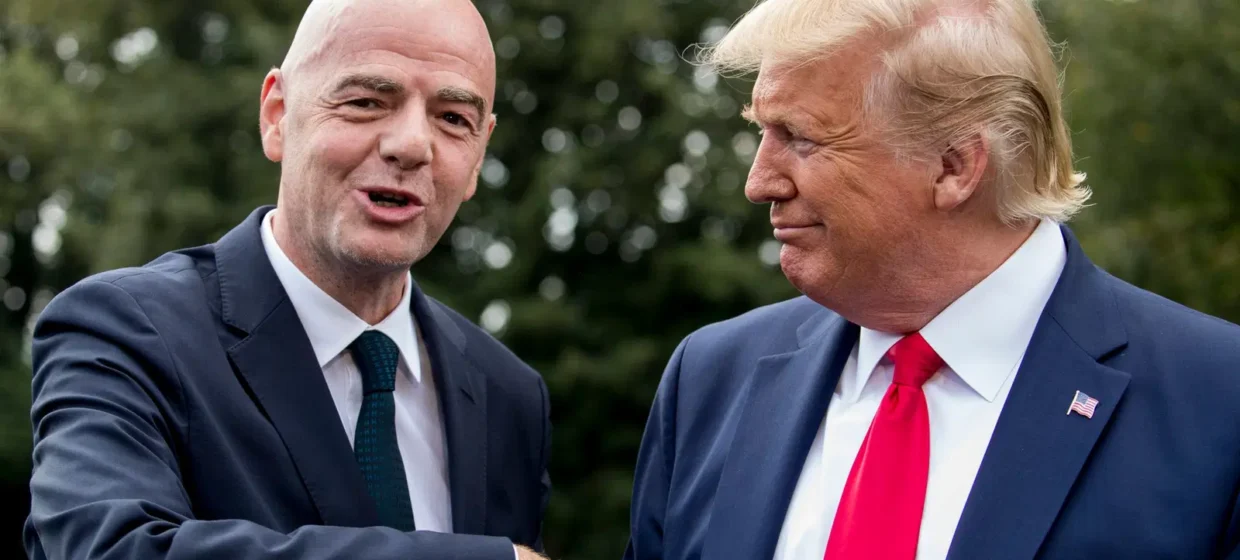
President Donald Trump called FIFA president Gianni Infantino to ask him to review the decision. Days later, FIFA’s Disciplinary Committee announced that Balogun’s suspension would be “suspended for a probationary period of one year,” clearing him to play against Belgium. It was, by multiple accounts, the first time since 1962 that a World Cup red card did not result in a player missing the next match.
That timeline alone should give anyone pause. But what makes this more than just another controversial officiating moment is who got involved and how. This was not a fan controversy, or even a federation formally appealing through normal channels. It was the head of state of the host nation picking up the phone and asking the president of FIFA to reconsider a disciplinary decision involving the host nation’s own best player, ahead of a match that same nation was about to play. A U.S. official told reporters the American government had also supplied “additional evidence” to FIFA’s appeals process, though nobody has specified what that evidence actually was.
The reaction from outside the United States tells you just how this decision is sitting with the footballing world at large. UEFA, European football’s governing body, said FIFA had ‘crossed a line it should never have approached’, calling the decision ‘unprecedented and impossible to justify’. Belgium’s football association tried to appeal the reversal and was told it had no legal standing to even challenge it, since it was not a party to the original proceeding. That detail is key here. It means the only recourse available to the opposing team was to lose the argument on a technicality before they even knew they lost.
Part of what stings here is the contrast between the World Cup America was supposed to be telling the world about itself, and the World Cup this incident now represents. The pitch, for years, has been that hosting in 2026 would be the moment soccer stopped being a niche interest in the United States and became part of the national sporting conversation on its own merits, through good teams, good games, and genuine fan growth. That story does not need asterisks. But now every future USMNT moment from this tournament, a knockout win, a deep run, hell, even a trophy, will carry one. Did they win it clean, or did they win it because a president made a call nobody else in the world could have made on behalf of their nation? Were referees brave enough to give decisions against the United States or will fear of political backlash and defamation from a head of state force them into true bias?
To be fair to the other side of this, if one can be, it is worth taking seriously what Trump and FIFA have both said. Trump has been explicit that he only asked for a review and did not instruct Infantino on the outcome, saying he could not tell him what to do and did not believe Infantino personally made the call. Infantino, in a public statement, said he regularly hears from heads of state and business leaders on World Cup matters and that the decision came from FIFA’s independent judicial process, not from him. USMNT head coach Mauricio Pochettino had already argued before any of this that the red card itself was harsh, calling the collision unintentional. There is a real argument, separate from who intervened, that the original call was simply wrong on its merits, and that Balogun himself said afterward he thought a yellow card would have been fairer.
Those defenses do not fully hold up, though, and the reason is structural rather than personal. Even a president who is scrupulously careful to phrase a call as merely a request for review is not a neutral petitioner. When the most powerful person in the country picks up the phone to a sports federation, the balance of power in what should be a run-of-the-mill sporting debate has been irreparably harmed. FIFA can say its Disciplinary Committee acted independently, and that may even be true in the narrowest procedural sense. But anybody who has seen the frankly inappropriate relationship formed between Donald Trump and Gianni Infantino the years and months leading up to the summer tournament, it will come as no surprise.
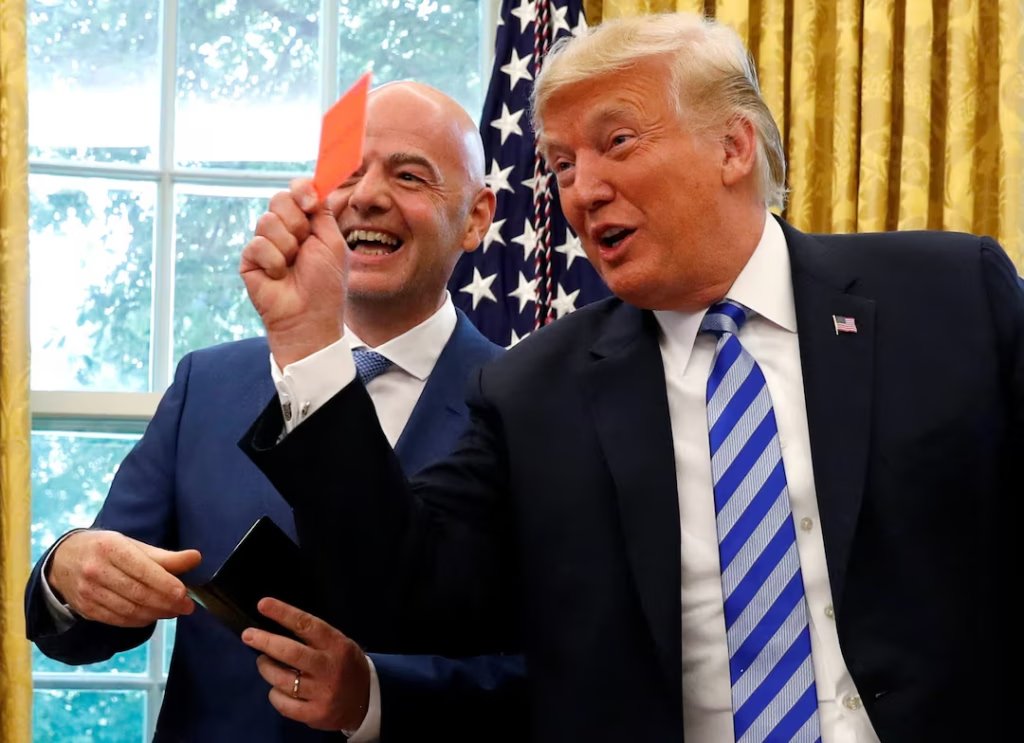
Whatever happens on the field against Belgium and beyond, this is now part of the permanent record of the first World Cup hosted on American soil since 1994. Not the attendance numbers, not the ratings, not even necessarily how far the team goes. The story that will get told for years is the one about a red card that disappeared because of a President’s phone call, and a federation that could not turn down the opportunity to take an unfair sporting advantage off the silver platter.
For USMNT fans with a shred of interest in a just world, it leaves a major pit in the stomach after the first four games of the team’s campaign were a genuine revelation. The scenes in Seattle, Los Angeles, and Santa Clara painted a picture that all American soccer fans had hoped for, real buy-in from the masses after getting a taste of what being a serious soccer nation could feel like. While, unfortunately, there has been plenty in the United States that have seemingly celebrated the fact that “their” team is the beneficiaries of a frankly corrupt, and scandalous decision, for true fans that want to see their team win fair and square, and show the true growth of American soccer, it will leave a permanent stain on the memories of what was shaping up to be an unforgettable cultural moment.
