Why Every New MLS Stadium Looks the Same (and Why It Makes Sense)
October 21, 2026
WORDS
Adam Booker
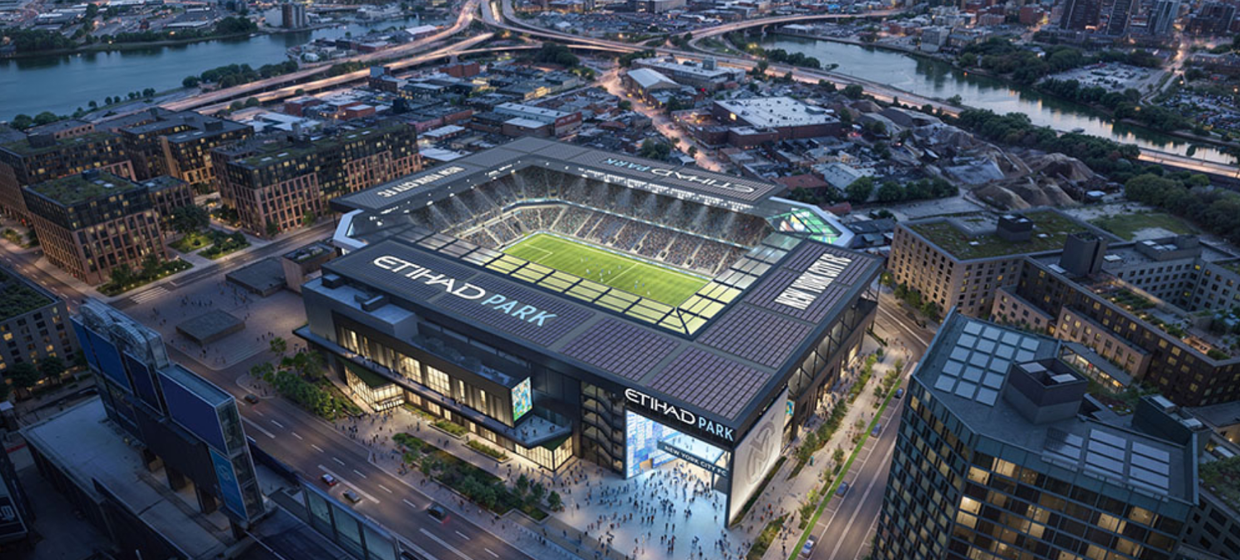
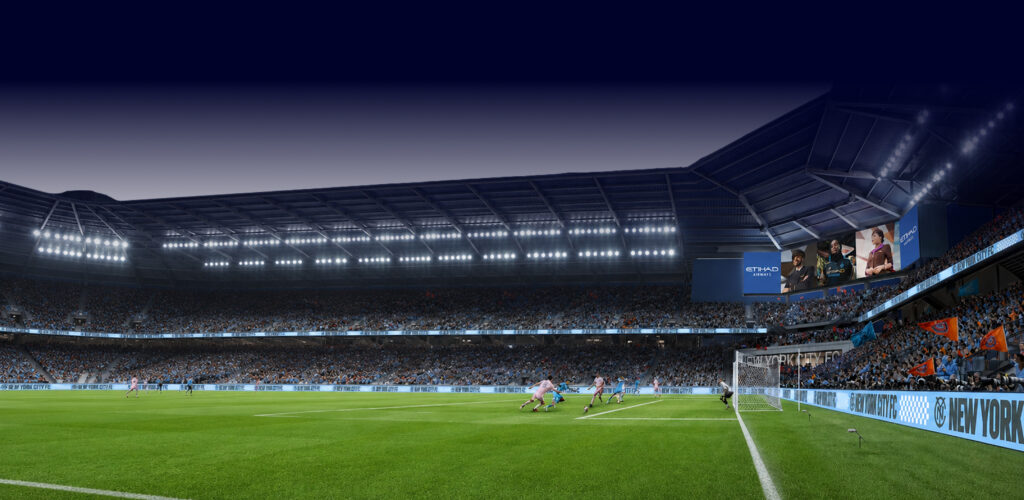
Put the newly shared images of NYCFC’s Etihad Park next to renderings of the Chicago Fire’s soon-to-be home McDonald’s Park and you could be forgiven for thinking someone printed the same drawing twice. Both hold somewhere between 22,000 and 25,000 people, and both have nearly identical seating plans, VIP suites, safe-standing supporters sections, and general lack of aesthetic variety. Toss in other modern stadiums such as Austin’s Q2 Stadium, FC Cincinnati’s TQL Stadium and Columbus’ ScottsMiracle-Gro Field, and the family resemblance is hard to ignore.
It would be easy to blame laziness, but that isn’t really what’s going on. The sameness comes from a handful of factors pulling in the same direction: sound, money and a very small circle of people who design these modern venues.
Let’s start with the acoustics, because of course, it’s they key to making a home stadium a fortress. For years plenty of MLS teams played in huge NFL venues that swallowed their crowds, and the league’s push for soccer-specific stadiums was a major step towards fixing. The main tool for creating atmosphere is roofing and steep, intimate seating. A roof that covers the seats not only keeps fans out of the elements, but it traps noise and sends it back down toward the pitch. In a stadium of 20,000 people rather than a cavernous 70,000, that makes a world of difference.
That one requirement drives most of the stadium’s shape. When Gensler designed Austin’s Q2 Stadium, the team ran computer models for airflow, sunlight on the grass and, above all, noise, and the results shaped both the bowl and the roof. If a handful of architects are chasing the same acoustic goal with similar software, they’re going to land on similar answers. You can trace the idea back through earlier stadiums as well. San Jose’s PayPal Park, which opened in 2015, tied its roof to the back of a very steep seating bowl so sound couldn’t escape (though that does feel slightly futile given one end of the stadium is wide open). Each new building has refined that very formula. The formula also tends to produce a tidy rectangle with seating on all four sides. That works well for sightlines and sound, but it leaves little room for the odd, accidental character of an older, soulful ground.
Money pushes the build the same way as well. The first wave of soccer-specific stadiums were cheap by today’s standards. The Dignity Health Sports Complex in Carson, California cost around $98 million to build and Toronto’s BMO Field about $120 million. LAFC’s $350 million stadium was the most expensive in the country when it opened in 2018, but now Etihad Park is estimated at more than $780 million, and McDonald’s Park is a $750 million project, both privately funded.
When a club is putting that much of its own money on the line, the smart move is to avoid surprises. A compact single bowl has a smaller footprint and costs less to build, plus a roof that shares structure with the seating is cheaper than one that stands on its own. A layout that has already worked in Austin or Cincinnati is easier to explain to lenders, contractors and city officials than attempting to create quirks that nobody else has tried.
The third factor is the simplest — only a few firms do this kind of work. HOK, Populous and Gensler have designed most of the soccer stadiums in the US. Gensler is behind both McDonald’s Park and Q2 Stadium, and its sports group, led by Jonathan Emmett, also designed LAFC’s stadium, while Populous designed TQL Stadium in Cincinnati. Reports differ on who exactly gets credit for Etihad Park, but they point to HOK, whose sports practice is the ancestor of Populous. These people attend one another’s openings and borrow solutions they’ve seen work. Clubs likely tour the newest stadium and then ask their hired firms for something like it, but with their badge and colors slapped on the replica facade.
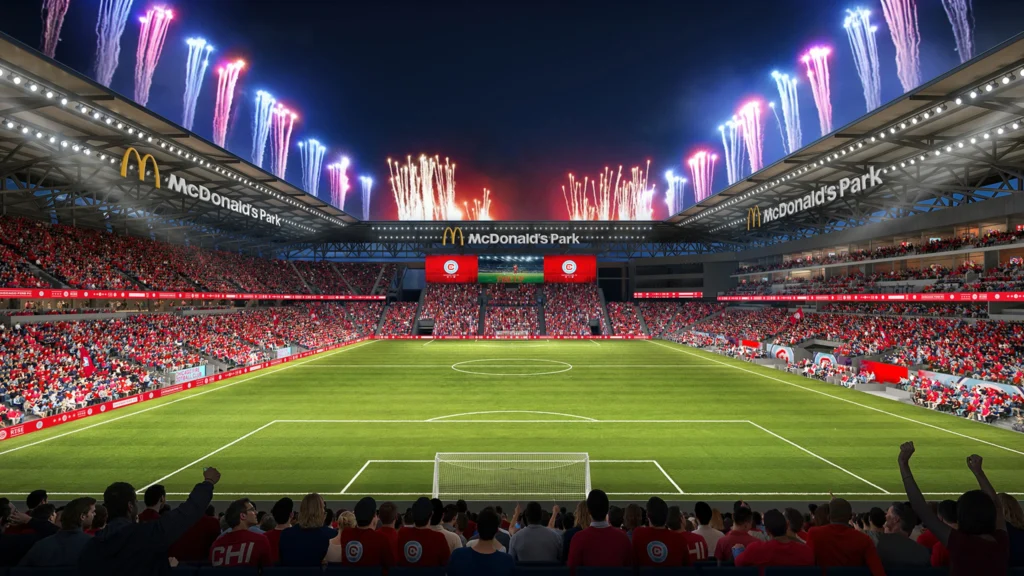
Each stadium does get its own local story, however, usually told through materials. Chicago’s design nods to the city’s industrial history with a brick facade, and Etihad Park does the same for its corner of Queens. Not everyone is convinced though. Readers commenting on Chicago YIMBY’s coverage of the Fire stadium complained that it has no real identity, tied neither to the club nor to the city nor to the riverfront it sits on.
Let’s make one thing clear, however. The point of these buildings isn’t to be admired from outside, it’s to make a Saturday night match in your home feel loud and intimate, and for fans that waited years to leave short-term rentals for their forever homes, that goal has been achieved.
For years, some of the league’s biggest clubs found themselves in situations that were never sustainable, and some, a downright stain on the growth American soccer is trying to undergo. NYCFC has spent its entire existence as a tenant bouncing between Yankee Stadium and Citi Field, two baseball parks where the soccer pitch is a temporary guest and the club never gets to build anything that feels like home. The Chicago Fire have wandered too, from the suburbs in Bridgeview back to Soldier Field, an enormous NFL stadium that’s the oldest venue in the league and has never been a natural fit for a 20,000-person soccer crowd.
Inter Miami spent its early years in a converted facility in Fort Lauderdale before finally getting the spectacular Nu Stadium. These arrangements were hard on supporters, hard on players, and hard on the clubs’ finances, since you can’t build a real identity or a reliable revenue stream in a building that belongs to someone else. Etihad Park, McDonald’s Park and the rest are ending that, and if you care about the long-term health of the league, that’s a real and overdue win. Etihad Park is even set to be the first fully electric stadium in MLS, which is a sustainability milestone in its own right.
That makes the next part feel a little ungrateful, but it is something worth mentioning. If every club gets a nearly identical building — the same canopy, the same sightlines, the same premium clubs, the same concourse layouts, the same sponsor-named plaza — then every matchday risks feeling identical too. Part of what makes soccer around the world, and even here in North America, so special is that each ground has its own personality, from its quirks and its history to the strange angle of a stand that nobody would design on purpose. A league full of replicas could slowly sand all of that down. Home supporters, who have spent years waiting for a place to call their own, deserve a stadium that feels like theirs and not a well-made template with their crest on it.
So expect the sameness to stick around until someone shows that a more distinctive building can match the formula on both sound and cost. The stadiums are also turning into anchors for much bigger real estate projects, which adds even more pressure to keep them predictable. Etihad Park sits inside a 23-acre Queens neighborhood that includes 2,500 affordable housing units, and the Fire’s stadium is the centerpiece of The 78 development along the Chicago River. MLS has escaped the era of the rented home. The challenge now is making sure the homes it’s building don’t all look like they came from the same catalog as well.

Contributors
Adam Booker