How New Fans in the United States Get Tricked into Ignoring Local Soccer Culture
July 14, 2026
WORDS
Adam Booker
Every four years, a familiar little conversion happens. Someone who’s never fully understood soccer watches a ball hit the net, hears a stadium erupt, and suddenly the whole sport makes sense. Soccer, football to the rest of the world, the sport that makes adults cry in Buenos Aires and lose their voices in Manchester, snaps into focus. Then comes the part that quietly blunts that spark.
The new American fan opens a streaming app, glides right past any local programming, and lands on a club thousands of miles away, a team that has nothing to do with their city, their weekend plans, or anyone in their circle. That becomes “getting into soccer.” That decision is understandable, however, it’s a small loss, and the psychology behind it is worth unpacking.
The thing people don’t always notice while they’re riding the World Cup high is that what feels electric isn’t really the tournament by itself, at least not at its core. The charge comes from everything that had to exist long before the cameras showed up: decades and decades of grass roots soccer, neighborhood identity, immigrant communities, rivalries that grew naturally, and the slow accumulation of organic meaning. Those chants the English were doing in a backwater Texas bar didn’t get written by a social media team, they were made in pubs and on terraces, carried down by grandparents, passed on the way a family recipe gets passed on, tweaked a little over time, but never disappearing.
With clubs like Boca Juniors or Borussia Dortmund, the team and the place it came from are tangled together. That bond wasn’t invented as “authenticity,” it’s what you get after generations of people showing up, sitting in the same seats, arguing about the same mistakes, and eventually bringing their kids along so the habit becomes part of the family. That’s why the World Cup hits so hard for some people in the United States. When Argentina plays, you’re not only watching eleven players in blue and white stripes, you’re watching the emotional output of a country’s identity, built slowly through ordinary matches long before it was packaged for a global audience.
So what happens when the final whistle blows and the feeling doesn’t immediately fade? A lot of new American fans try to jump straight to the “finished” version instead of looking for something like that nearby, they go hunting for whoever already has the most polished, most famous, most historically loaded product. And that almost always points overseas.
Studies of American soccer fandom regularly show the same pattern: many devoted fans in the United States follow international leagues, with the English Premier League at the top, while domestic leagues have a harder time holding attention. You can find plenty of Americans who follow the Premier League closely and barely know their closest professional club exists. The opposite scenario is much less common.
From a certain American perspective, it’s logical. Why spend your precious time on a Saturday night watching a scrappier MLS or USL match when you can watch the best players in the world the very same day, with sharper broadcasts, bigger names, more ready-made storylines, and a century of drama already baked in? Next to that, the local club can look unfinished, like a rough draft. But that comparison is the trap.
It’s taking your local team’s opening pages and holding them up against someone else’s completed novel, then deciding you won’t bother participating in the writing. Here’s what highlight packages never really communicate though: no matter how much you learn about Arsenal’s back-four, no matter how many Real Madrid shirts you buy, you still won’t be a part of the fabric of that club the way a local fan is. Not because you didn’t study enough, but because belonging isn’t something you stream your way into. You can watch every match, memorize every chant, argue with strangers online at three in the morning, and you’re still, in the simplest structural sense, an outsider looking into someone else’s community, a tradition built by other people around their own lives.
Now compare that with what might be sitting a few miles from your front door. A supporters’ section you could stand in this weekend, players you might actually run into at a coffee shop, a rivalry that matters because the other team really is from down the road, not because you adopted a hatred. That doesn’t make local fandom “better” or more pious, but it does make it a different breed of attachment, and it’s the only one that can grow into the same kind of culture you were reacting to during the World Cup. Following a club across an ocean from your couch can be enjoyable, even deeply enjoyable. But it’s still a simulation of belonging. Showing up locally puts you inside the process that creates the thing you admired in the first place.
If we focus on MLS for a moment, criticism of the lack of jeopardy, promotion/relegation all makes sense, and for many diehard MLS fans, is shared wholeheartedly. But the biggest and most common gripe of the American soccer detractor is the that the players and teams simply are not good enough to warrant attention. Yet what those detractors fail to see, or simply don’t care about in many cases, is that the very essence of the sport around the world is it’s ability to be connective tissue between you and your community, your city, your friends, your family.
Why do we have to be different? The drop in quality from the Premier League does not seem to matter to the 19,000 Alajuelense fans that pack the Estadio Alejandro Morera Soto in a small Costa Rican neighborhood on a weekly basis. In Argentina, where the top-division doesn’t crack the top-10 leagues in the world, many clubs see 40,000 or more fans on a weekly basis. Outside of the United States, soccer is a sport where quality doesn’t matter. What matters is that the 11 players on the pitch represent your community whether they are superstars making $5 million per year, or a journeyman making less than a dentist.
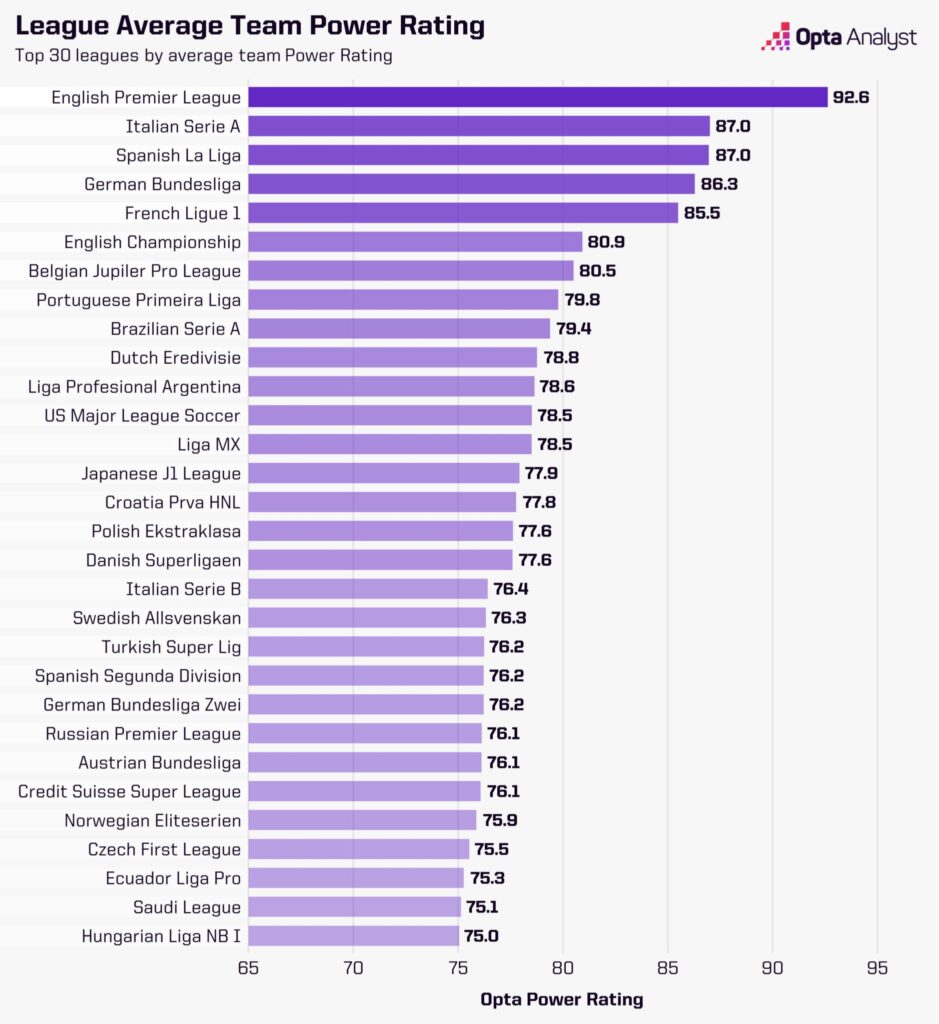
And there’s a genuinely exciting twist here, one that should make new fans feel more lucky to be here rather than late to the party. In the U.S., a lot of local soccer culture isn’t some ancient, closed-off inheritance you missed out on. It’s being formed right now, while the concrete is still wet. MLS clubs have done well to build modern, intimate stadiums, many of which are in the heart of major cities. Those very stadiums are being filled on a weekly basis, the religious-like connection between communities and their clubs is being built, or in some regions is already fully developed. The level of play has been dramatically increased in recent seasons as well. Well-researched data puts MLS on par with leagues like Brazil’s Serie A, Liga MX, and the Belgian Jupiler Pro League. These are leagues with serious pedigree, even if they pale in comparison to the financial might of the Premier League.
That’s the opening new fans are being given, whether they recognize it yet or not. The tradition that makes European and South American clubs feel so magnetic didn’t appear fully formed, it took time. It took regular people showing up when there was nothing glamorous about it. American soccer culture is being built the same way, in real time, in stadiums, bars, and online forums. Skipping that to consume somebody else’s finished product isn’t only passing on a chance to support local soccer, it’s stepping away from the very process that made the thing you fell in love with worth loving.
None of this is an argument against watching the Premier League, LaLiga, or anything else abroad. I personally got pulled in by the Premier League when I was barely 12-years-old, long before local soccer was on my radar. The quality is real, your fandom is too, and there’s nothing wrong with wanting to watch the best soccer wherever it’s played. The problem isn’t interest, it’s exclusivity, treating an overseas club like it replaces local involvement is a fallacy that is too often ignored.
So if the World Cup sparked something in you this summer, the most honest next move probably isn’t ordering a shirt from a club you might never go near in your life. It’s finding out who plays close to you, MLS, USL, NWSL, a local pub side, a rec league that meets on Saturday mornings, and then going. Not because it will look as polished as what you just watched on TV, because it probably won’t, at least not yet. Go because it’s yours to help build, and 50 years from now, when somebody else falls for this sport during a future World Cup, there’s a chance part of what they’re falling for is a culture you helped create in a very real way.
