Why Fox’s World Cup Coverage Does More Harm than Good for American Soccer
July 10, 2026
WORDS
Adam Booker
Fox paid $485 million for the exclusive English-language rights to the second World Cup ever held on American soil despite initially acquiring the rights to just the 2018 and 2022 editions of the tournament. This automatically gave them the leading voice of the biggest tournament in the world in a country where soccer has spent the better part of 40 years trying to claw its way into the mainstream sports conversation. “For us, it’s like having two NFL seasons in a single year,” Fox Sports president of insights and analytics Mike Mulvihill said.
But a month into the tournament and with plenty of evidence under our belt, it’s worth asking whether the coverage is helping that cause or quietly working against it. A World Cup, especially one happening in your own backyard, is supposed to be a showcase for everything that makes the sport worth falling in love with. Yet viewers who have tuned into the various Fox broadcasts in recent weeks have been met with shallow analysis, purposeful ignorance of the politically charged controversy surrounding the tournament, major pronunciation errors from broadcasters, and perhaps worst of all, awkward tension between panelists who seemed destined for fisticuffs at any given moment.
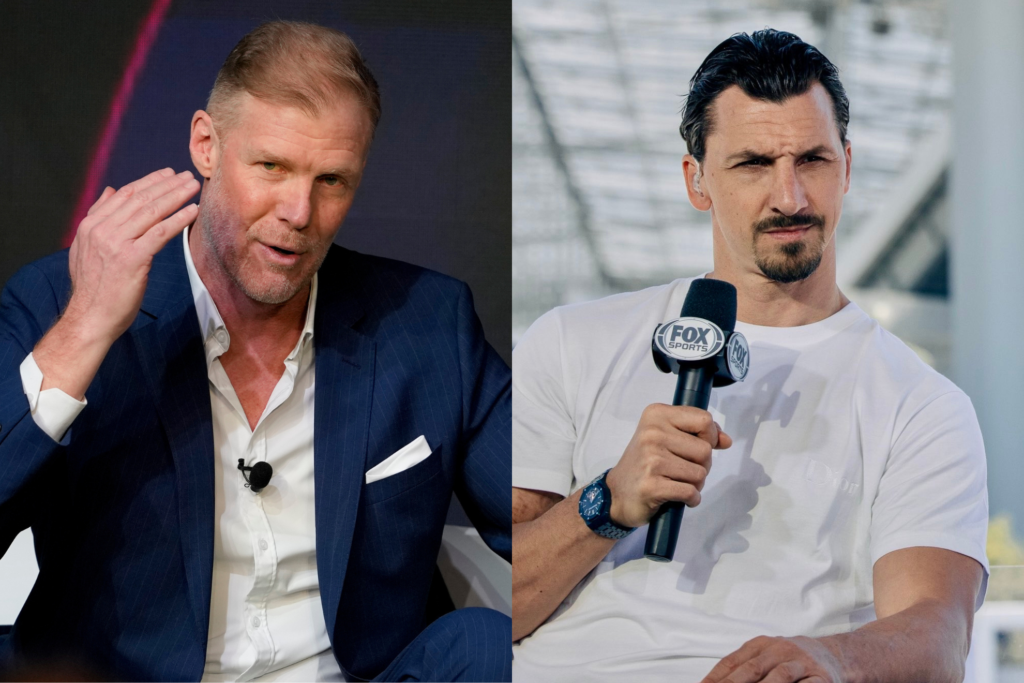
Along with host Rebecca Lowe and panelist Thierry Henry, we have the eccentric duo of Alexi Lalas and Zlatan Ibrahimovic, two men who clearly see the sport, and maybe each other, very differently. The pair have regularly traded barbs on air, enough that it has become its own running storyline. Even before the tournament kicked off, there were people inside the industry wondering aloud whether leaning so heavily on Lalas was the right call, with one prominent media columnist suggesting Fox would be better served letting Ibrahimović take the spotlight instead, not so gently comparing Lalas’s brand of analysis to sports talk bluster rather than genuine insight.
It hasn’t stayed behind the camera either. During the opening weekend, Lalas told Ibrahimović, more or less to his face, that if Norway star Erling Haaland had a big enough tournament he’d rank him above Zlatan in the pantheon of legendary players, a comment that hung in the air long enough for fellow panelist, and footballing legend, Thierry Henry, to visibly not know what to do with himself. Ibrahimović himself responded with an awkward yet diplomatic “Alexi, we can discuss. Trust me, it’s all love” that did absolutely nothing to clear the tension away from the desk, or our living rooms. It happened again after France’s win over Senegal, when Lalas revived a halftime argument about whether the French had played with too much swagger in the first half, and Ibrahimović cut him off with a line that landed less like commentary and more like a pointed jab at a co-worker, “It’s not arrogance, it’s confidence,” he said. “Ignorant people will say it’s arrogance, intelligent people will say it’s confidence.”
None of that is analysis in any meaningful sense. It’s two strong personalities working out something unresolved between them in real time, on live television, while the game everyone tuned in for keeps happening somewhere just off camera, and for someone watching their first or second World Cup ever, trying to learn how to actually watch and digest sport, that’s a strange and unhelpful thing to be handed instead.
Then there’s the matter of the in-game commercials, which is its own kind of frustrating because soccer’s biggest selling point in a country built around stop-start sports like football and baseball is the closed-loop drama that keeps running no matter what. However, Fox found a way around that with the help of FIFA. The network came under real criticism after its very first match, Mexico against South Africa, when repeated cuts to advertisements meant viewers missed small stretches of actual live action, action they couldn’t get back later, action that simply happened while America was watching a beer commercial instead. The mechanism truly to blame here is the tournament’s new hydration breaks, introduced this year as a genuine player-safety measure given how brutal the heat has been in some of these host cities, and on paper that’s a reasonable addition to the sport.
But Fox’s coverage cut to full-screen commercials during those three-minute breaks in each half, stacking three or four ads back to back, and by the time the broadcast cut back, the match was already underway again, meaning real moments of the game had quietly slipped by while everyone was watching something paid for by a sponsor.
Viewers didn’t hold back about how that felt, calling it “disgusting” and “embarrassing” on social media, and at least one broadcast leaned into the absurdity of it by introducing the ad break as being “powered by Powerade” the very instant play paused, which says quite a bit about how Fox seems to be thinking about these moments, less as a necessary pause to protect players, more as real estate to be sold. A report in the Wall Street Journal cites that Fox was selling 30-second ad spots for roughly $200,000 for early-round games and $750,000 for games involving the United States Men’s National Team. And it wasn’t only notable moments that got swallowed by ad inventory.
Fox’s broadcast missed Shakira’s entire opening ceremony performance in Mexico City, choosing instead to sit with four analysts inside an empty stadium in Los Angeles, a decision that left a lot of people online genuinely baffled, because if there was ever a moment built specifically to be unmissable, the opening ceremony of a World Cup in North America was it. After just one group game, legendary Uruguay manager Marcelo Bielsa made his thoughts on the breaks known.
“Playing four periods instead of two, alters the culturally constructed conception of how to interpret football,” he said. “In my view, it adds nothing and takes away a lot. When the match was divided into four periods, no thought was given to the effect it might have on what makes football such a captivating sport, but instead to other repercussions which I’m neither discussing nor analyzing.”
What makes all of this so much more damaging than it might otherwise be is the context of what Fox is conspicuously not talking about while it is busy selling Powerade and cutting to analysts in empty arenas. This World Cup arrived wrapped in genuinely serious controversy that any broadcaster with real feel for the sport would feel a professional and moral obligation to confront. Tickets have been a profound problem for the average soccer fan, with prices ranging from hundreds of dollars to tens of thousands of dollars, effectively placing this World Cup out of reach for the very people who love the game most. Attorney generals in California, New Jersey, New York, and Texas had opened cases related to World Cup ticket pricing, and FIFA president Gianni Infantino has responded to those investigations by describing his own approach as “relaxed,” a word choice that tells its own story.
The visa situation is equally troubling, and equally absent from Fox’s broadcast conversation. A Somali FIFA referee was denied entry into the United States entirely, an assistant coach from South Africa was initially turned away, at least 15 senior staff members of the Iranian national team were still without visas as the tournament got underway. What’s more, England’s official LGBTQ+ supporters group announced ahead of the tournament that it would not be traveling to the United States in any organized capacity, citing what it described as serious concerns about safety, discrimination, and the erosion of human rights protections.
One of Fox’s most experienced commentators, Ian Darke, marveled at the atmosphere created by Norway fans during their group match with Senegal, while also mentioning that very few Senegal fans were visible around MetLife Stadium. Darke conveniently failed to point out this is because Senegal fans were banned from traveling to the United States for the tournament by the U.S. government, not because of any lack of passionate support for their team.
These are not peripheral stories. They go to the very heart of what it means for a country to host the World Cup, which at its best and most idealistic, is a festival of the world’s most universal game, open to everyone. On the United Kingdom’s ITV broadcast, lead panelist and former England star Ian Wright did not shy away from speaking out on those issues.
“I’ve just read that the Somalian referee has been denied entry,” Wright said in the days leading up to the tournament. “Every few hours it’s another story, another story about fans denied, players denied, officials denied, journalists denied, now refs. I’m laughing but it’s not funny, it’s actually not funny and something has to be said. The expensive tickets, the most expensive tickets ever, expensive accommodation, transport through the roof. It has to be said.
“Is this how the hosts behave really for the greatest game, the greatest tournament in the world, is this how the hosts behave? Are we not hearing more? Are we seeing how Qatar got dragged, are we not hearing more? Is this the spirit of football, really? You know who I feel for? I feel for the American fans who are desperate for this, American soccer fans who are desperate for this, how embarrassed they must be. This is the World Cup, this is a World Cup of chaos. Whoever wins this World Cup is going to have to go through some serious chaos to get this done.”
For Fox, a network with its own well-established political sensibilities, the avoidance of these stories is not accidental. Its executive producer said ahead of the 2022 Qatar World Cup that he simply did not believe viewers wanted to be “distracted” by off-field issues during the tournament, a philosophy the network it quite clearly carried into 2026 with no signs of reconsidering it.
Even setting all of that more sinister business aside, there’s a more basic problem sitting underneath everything else, which is that the broadcast hasn’t always nailed the fundamentals, and commentary teams calling matches between countries and players unfamiliar to most American viewers have at times stumbled over, or simply gotten wrong, the names of the very teams and players they’re supposed to be introducing to a new audience.
During the June 18th broadcast of Uzbekistan vs Colombia, Fox’s play-by-play commentator consistently made the mistake of calling Fabio Cannavaro’s side ‘Kazakhstan’, famously an entirely different country from Uzbekistan. Foreign and sometimes unfamiliar nations made up of equally unfamiliar names are the entire point of a World Cup for a casual fan, half the fun is learning who these players and teams are. A broadcast that can’t consistently get that right is brazenly undermining its own credibility in exactly the moments it should be building trust with someone who’s still deciding whether this sport is worth their time.
Soccer will grow in the United States through habit and access to quality coverage that can keep them engaged. A broadcast at the most important hour that buries the action under ad breaks, lets personality conflicts crowd out real insight, and can’t always get the basics right makes that slow, patient work of building a fanbase noticeably harder than it needs to be.
The matches themselves, for what it’s worth, have mostly delivered; the USMNT’s opening win alone pulled in almost 25 million viewers across Fox, Telemundo, and Peacock combined, which is proof enough that the audience is out there and genuinely willing to show up. Whether Fox’s coverage actually gives all those new viewers a reason to keep showing up for the moments that carry less of a hometown appeal, is a different question. Right now, it’s not entirely clear the answer is yes.

Contributors
Adam Booker
TAGS