MLS Cash Transfers: A New Era of Storylines Happening Off the Pitch
September 2, 2026
WORDS
Adam Booker
For most of its existence, MLS ran on a kind of Monopoly money. If the Seattle Sounders wanted a player from FC Dallas, nobody was writing an actual check. It was General Allocation Money, a draft pick maybe, an international roster slot, some accounting-department alchemy that turned into a trade. Real cash, the stuff every other soccer league on earth uses to buy players, only left an MLS front office’s pocket when the player in question was walking through customs from Liga MX or South America or Europe. Inside the league, dollars and cents simply weren’t part of the conversation.
That started to change in 2025, when the league rolled out something now nicknamed the “cashfer.” Clubs can suddenly pay other MLS clubs actual money for players, no allocation money or roster assets required. It launched cautiously, two incoming cash deals and two outgoing per team per year, and whatever a club spent still hit its salary budget the same way a foreign transfer fee always had. Nobody was sure how much teams would actually use it.
Turns out, plenty. Weeks into the new rule, reigning champions LA Galaxy sold star striker Dejan Joveljić to Sporting Kansas City for a transfer fee of $4 million, the first cash transfer in league history. Just two days later the Philadelphia Union sold homegrown midfielder Jack McGlynn to the Houston Dynamo a deal worth roughly $2.1 million. Not long after, FC Cincinnati let Luciano Acosta walk to FC Dallas, then turned right around and spent big to the tune of $12 million to bring star attacker Evander in from Portland, a deal that would’ve sounded absurd a couple years ago. Two marquee names, two teams essentially trading their best players for cash in the same window. In all likelihood, if that duo were looking for moves away 12 months earlier, they would have left MLS altogether.
Then MLS decided the training wheels weren’t necessary anymore. Going into 2026, the league scrapped the cap entirely, teams that used to be limited to one cash trade a year could now do as many as they wanted. It also dropped the old restrictions on intraleague loans and set a $50,000 floor for a deal to count as an official cash trade. This past winter, D.C. United sent $4 million to Philadelphia for Israeli international Tai Baribo. These aren’t outliers anymore. This is just how business gets done now.
Here’s why that actually matters for anyone who watches this league: it changes who the villain could be. For years, the biggest heartbreaks in MLS fandom came from far away. Your favorite player gets a call from a club in Liga MX or some mid-table side in Europe, and he’s gone. It stings, sure, but there’s a built-in emotional buffer. He’s not walking into a stadium you’ll see twice a year, he’s disappearing into a league most fans barely follow.
Cash transfers don’t offer that mercy. When a rival reaches across the table and just buys your best player, there’s no distance to soften it. That’s a team you play home and away, a team whose name gets booed at your stadium, suddenly boasts the name of your favorite player on the back of their shirt. It’s personal in a way an overseas transfer never was, and personal is exactly what makes for great sports television.
Picture a club like Inter Miami or LAFC, sitting on cash from an overseas sale, deciding to spend it not on some European name but on the best player from a team they’re fighting for a playoff spot. It tells a regional rival, we can simply outbid you for the guy you built your whole attack around. The fanbase losing that player doesn’t get to shrug it off as some faraway business decision, they watch him show up in enemy colors on their own patch a few months later, and that memory doesn’t fade by kickoff.
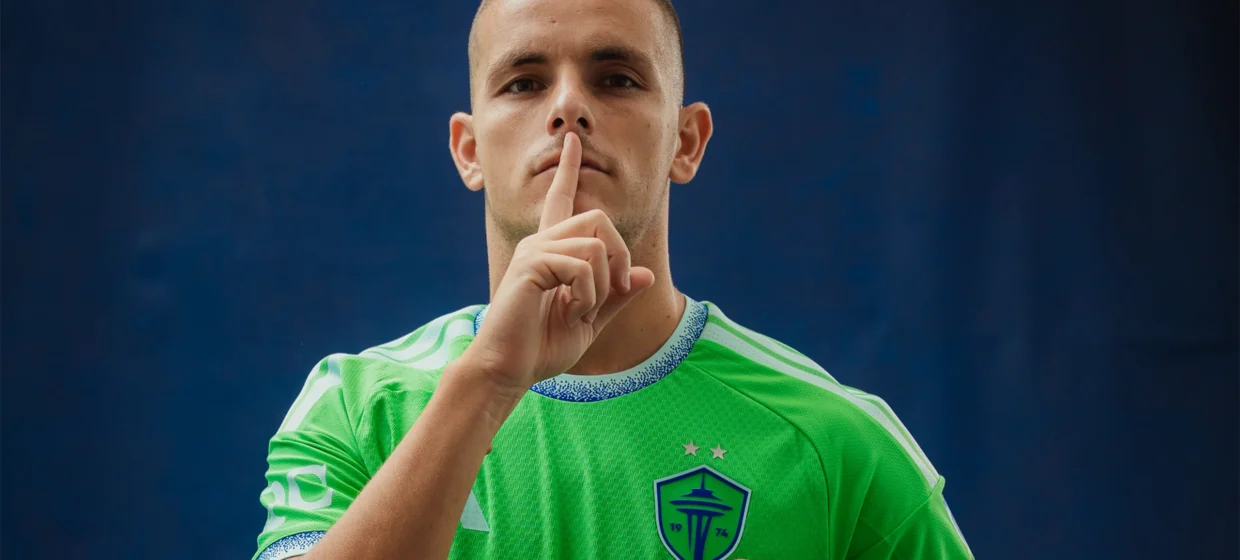
We will be seeing much more of that in the months and years to come. This summer transfer window is dying down, but the deals are heating up. The aforementioned Dejan Joveljić just made a $6 million move from Kansas City to Seattle. Reports have emerged that St. Louis City are closing in on a league-record $12 million-plus deal for Colorado’s star forward, Rafael Navarro.
There’s a compounding effect too. A club that sells a star for cash can spin that revenue into a shopping spree of their own, maybe even poaching from a totally different MLS rival with the very cash it just received. One transaction sets off another, and now you’ve got a chain of moves rippling across the league that fans can actually track in real time, instead of one-off news that vanishes into a wire report.
MLS went nearly three decades treating player movement like an internal HR exercise, all spreadsheets and cap math, none of the theater that makes European transfer windows nearly as dramatic as the action on the pitch. And now, MLS clubs are leaning into it fast, and if the early returns are any indication, this is only going to get louder. A league where rivals can just buy each other’s stars isn’t just better business, it’s the kind of drama MLS has been trying to manufacture for years. Now they don’t have to force it.
