Why This Wave of Burgeoning USMNT Starlets Feels Different
October 1, 2026
WORDS
Adam Booker
American soccer fans know the tale that’s as old as time. A teenager shows something special, the hype machine kicks in after social media clips go viral, and somebody calls him generational before he’s old enough to rent a car. Then the story goes quiet after he ends up on a European bench, or on loan somewhere nobody watches, or in an under-23 side playing in front of a few hundred people. After enough rounds of this, a lot of us learned to keep our excitement in check.
That’s what makes the mood around the burgeoning group of USMNT stars we’ve seen in this week’s friendlies, such as Julian Hall, Justin Ellis, Cavan Sullivan, Adri Mehmeti and the rest of this group so interesting. People aren’t just excited, they’re excited in a way that feels different from previous generations. The reason for that feeling? These starlets are not just popping up on social media clips from youth-level soccer, they are key players at clubs playing at a good professional level.
When you think about how we used to talk about young American players, the word was always “prospect,” which is a polite way of saying nobody knew anything, but it looked promising. Freddy Adu is the obvious example in the 2000s. Adu debuted in MLS at 14 and became a national obsession, but he came along before the league had really figured out how to develop a kid with such raw talent. Later waves had a different problem, however.
Some of the most promising American prospects left for Europe in their mid-teens, which sounded like progress, but a 17-year-old at a big European club can spend two years in a reserve setup behind a squad built to win now, an youth matches or under-23 fixtures are fine for development, but they aren’t the same thing as being counted on. A lot of those players had more hype than evidence.
This group breaking out as we speak has the evidence. When Julian Hall scores for the national team, it’s a familiar sight for MLS fans who have already seen him score 10 goals in MLS in 2026. Adri Mehmeti isn’t a name to watch on Football Manager, he is a teenager controlling the midfield in games against experienced pros on a weekly basis, some of whom are more than a decade older than him. Cavan Sullivan made his Philadelphia Union debut as a young teenager and in two years since has become the talisman for the first-team. Sullivan himself has already racked up 12 G/A in 24 MLS games this season.
Former pros will never hesitate to point out why that distinction matters. Training shows you what a player can do in a simulated environment, while competitive professional matches show you what a player does when the other team is trying to stop him, or when there is a crowd of 20,000 giving him stick. A season, or more, of that environment builds a different kind of player than the same number of hours in a development bubble.
Over the last decade or so, some MLS clubs have invested in their academy setups, then second teams to bridge the gap between the academy and the first team, and, maybe most importantly, got comfortable actually playing those kids who came out the other end ready for the step up. While I have qualms with the general setup of the MLS NEXT Pro system, it has given young players a rung on the ladder that barely existed before.
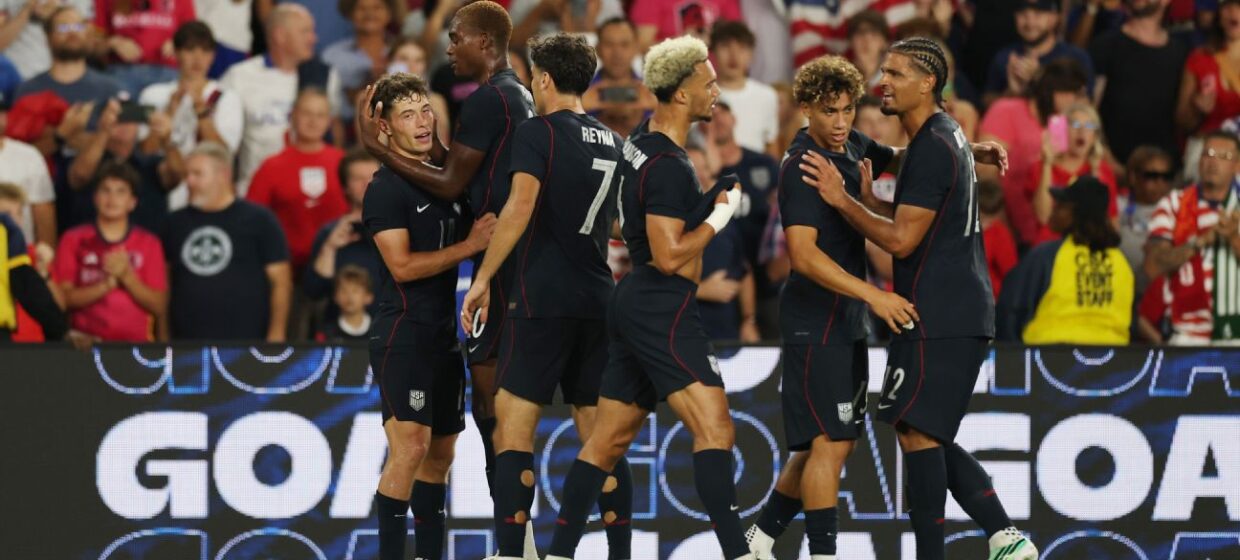
You could see the results in St. Louis this week, where a young USMNT side came back from 2-1 down to beat Chile 4-2. Two of the goals came from MLS-developed teenagers. Six players got their first career start for Mauricio Pochettino, and all six play in MLS. Afterward Pochettino gave a lot of the credit to the clubs, the academy coaches and the first-team staff who got these players ready.
“What we felt — and that is credit to all the coaches and coaching staff in MLS and the teams in MLS — (those coaches) deserve the credit more than us,” Pochettino said. “Because how the understanding of the game, the capacity to adapt so quickly to the tactical demand, that’s because they have good coaches. It is important to praise all the coaches that are in MLS working with these guys.
“The way that the (young players) understood from day one what we expected from them was amazing. We were talking after the first and second training session, that every single concept that we put out, (the players) assimilated and applied at training.”
What stuck with me most was how comfortable those young players looked — ‘out of their depth’ is not a phrase that can be applied to any of these teenagers. Julian Hall said after the game that the new faces were playing like it was almost their 100th cap, and that’s about right. You can’t really coach that comfort either, it comes from habit, and the habit has been formed while cutting their teeth in competitive MLS minutes.
Let’s not oversell it, though. Scoring against Peru and Chile in friendlies doesn’t really tell us how this group will handle the ups and downs of a Copa America or World Cup campaign, or even making the jump to the toughest leagues in Europe. And the next test is never more than right around the corner for young players trying to prove themselves as more than a flash in the pan.
